September 25, 2026
Protect Your Brand on Amazon
Amazon is a massive marketplace with hundreds of millions of different product listings where independent sellers now account for more than 60% of sales in Amazon’s store.
Amazon offers an enormous assortment of merchandise and convenient buying options at competitive prices. At times, retailers are enticed to sell their products on Amazon simply to follow the prevailing trend. They may find, however, that Amazon is already saturated by vendors selling their products.
When supply of a product on Amazon is high, sales to any one seller may seem low due to demand dilution. On Amazon, the Buy Box influences which merchant will display its product offer to the customer, and as a result, the Buy Box algorithm determines which vendor will get the visibility in cases where there are several vendors offering the same product. Where multiple sellers offer the same product, the Buy Box is won based primarily on competitive pricing and delivery speed, with fulfillment method, seller feedback, and other performance metrics also influencing which seller wins the sale at a given time.
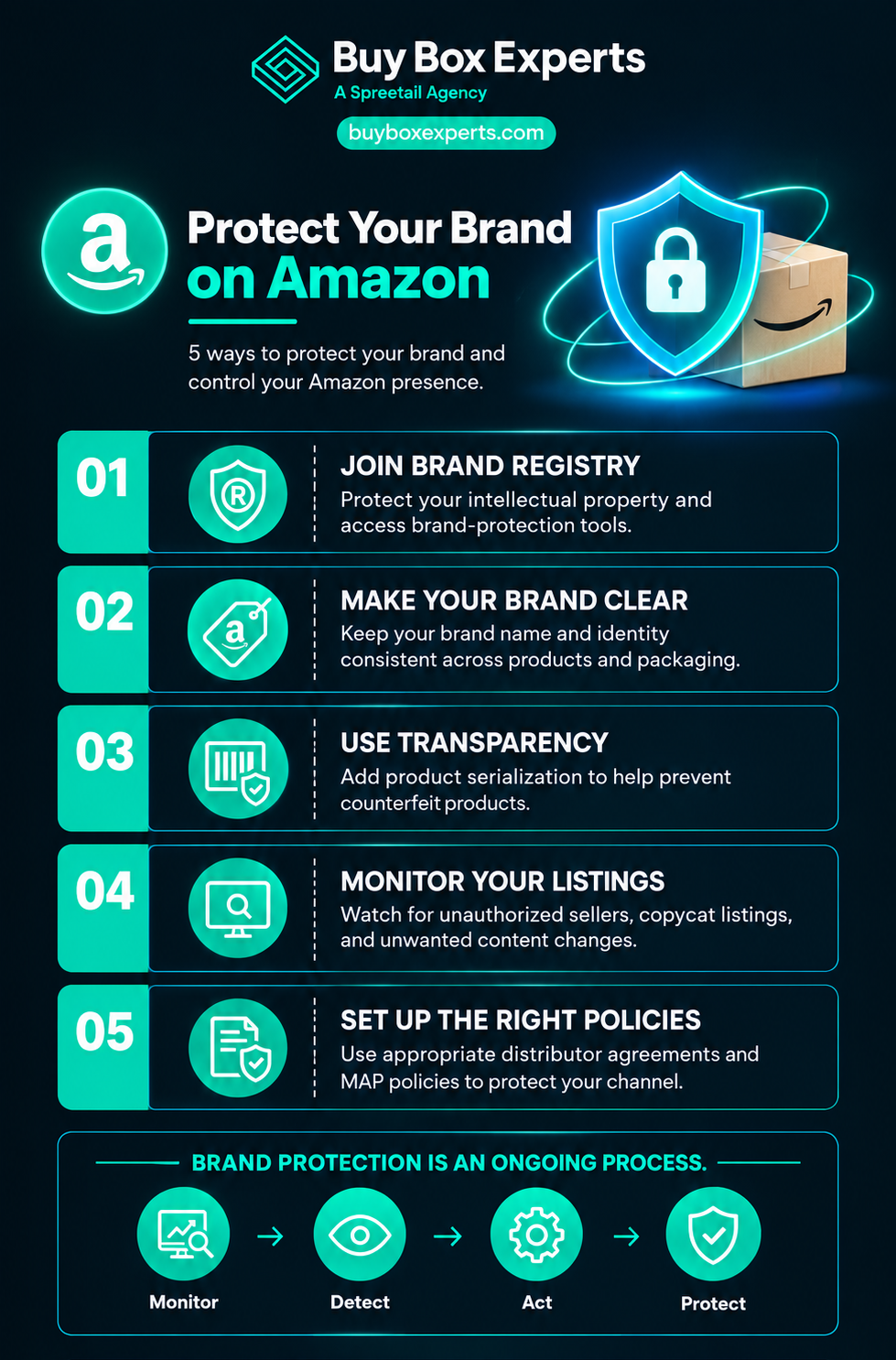
To better control content, stabilize pricing, and capture a large majority of sales on the channel, sellers need to protect their brand on Amazon. Here are a few brand-protection considerations:
Understand that Amazon will not assist you in taking down unauthorized sellers – Amazon is a catalog-based business which encourages multiple offers on product listings. Amazon does prohibit counterfeit items, trademark infringement, and copyright violations, but it does not prohibit grey market products. Amazon offers tools to help sellers protect their brands and address potential violations. Depending on the circumstances, Amazon may also take action against sellers whose offers violate its intellectual property, authenticity, or other applicable policies.
Apply for Amazon Brand Registry
Amazon Brand Registry now allows eligible brand owners to enroll when they have a logo that includes the brand name permanently affixed to their products or packaging and a pending or registered trademark for the brand name or logo from a designated government trademark office. The applicant must be the trademark owner.
Brand Registry also provides tools to detect and report suspected intellectual-property infringement and strengthens automated brand protections.
Make Your Brand Identity Clear
Amazon’s current public Brand Registry enrollment requirements do not list a public website as a basic requirement. Instead, brands should make sure their brand name or logo is permanently affixed to the product or packaging and that they hold a qualifying pending or registered trademark.
Use Amazon Transparency
Transparency is a product-serialization and anti-counterfeiting program that uses unique serial codes to help ensure authentic units are listed and shipped to customers.
Consider Project Zero for Eligible Brands
Project Zero combines Amazon’s automated protections with a self-service tool that lets eligible brands immediately remove confirmed counterfeit listings; it can also be used alongside Transparency serialization.
Exclusivity and MAP Policies Distributors
Agreements that control pricing to the end consumer can lead to antitrust issues, so it’s best to implement Minimum Advertised Pricing policies, not agreements, with your retailers, resellers, and distributors. You may also enter into additional resale agreements (without pricing controls) that forbid your resale partners from selling your product on certain channels like Amazon.
Handle Unauthorized Sellers Proactively
Monitor your product listings to identify unauthorized Amazon sellers. Once identified, some common practices include issuing ‘cease and desist’ messages and placing “test buy” purchases to validate product authenticity. If the product isn’t genuine, you can file a complaint to Amazon so that they take the seller’s offer down.